Phytocontrol 1st French laboratory accredited for 1,4 DMN
Phytocontrol is the only laboratory in France to offer COFRAC accredited 1,4-dimethylnaphthalene analysis.
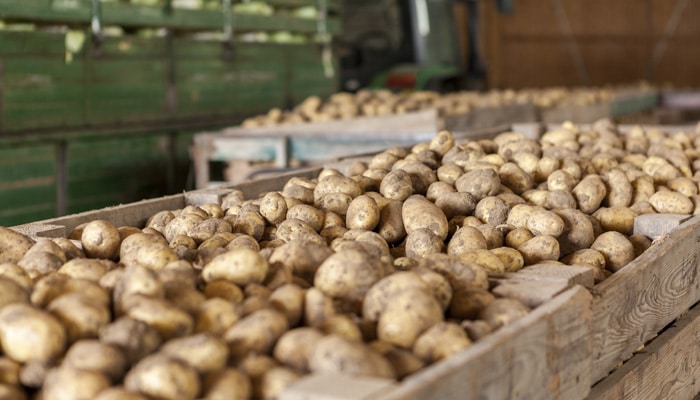
1,4 DMN is an active ingredient authorised in the EU. It acts as a sprout inhibitor during the storage of foodstuffs. This molecule is only authorised on potatoes intended for human consumption.
Regulation 2015/399 set the Maximum Residue Limit at 15 mg/kg on potatoes, and 0.01 mg/kg on all other matrices
1,4 DMN as a substitute for CPIC in potato storage
Chlorpropham (CIPC) has been the most widely used product for decades to control sprouting in potatoes during storage.
Regulation 2019/989 banned CPIC and the use-by date for this pesticide residue had been set for October 2020. In France, stocks of of this product could be used until 8 August 2020. Following this ban, a temporary MRL for chlorpropham on potatoes was set at 0.4 mg/kg by Regulation 2021/155.
One of the alternatives to CPIC is 1,4 DMN. Although the MRL is set at 15 mg/kg, tubers treated with a phytosanitary solution containing 1,4 DMN should not be fed to animals.
In fact, the conclusions of the ANSES evaluation of the MA application for the DORMIR preparation state that no study has been conducted to estimate the level of residues in foodstuffs of animal origin.
Our solution dedicated to the food safety of fruits, vegetables and cereal products
The Phytocontrol laboratory is able to analyze under COFRAC accreditation 1,4 dimethylnaphthalene at a limit of quantification of 10 ppb on the following matrices :
- water-rich products,
- acidic and water-rich products,
- products rich in sugars and low in water,
- products low in water and fat,
- alcoholic beverages,
- fruit and vegetable juices,
- soft drinks
Need technical, regulatory and pricing information? Our customer service is available from 8am to 8pm from Monday to Friday.
And to make sure you don’t miss out on any Phytocontrol news, join us on our LinkedIn and Facebook pages!